News
UK Active 'Education Programme of the year' 2026
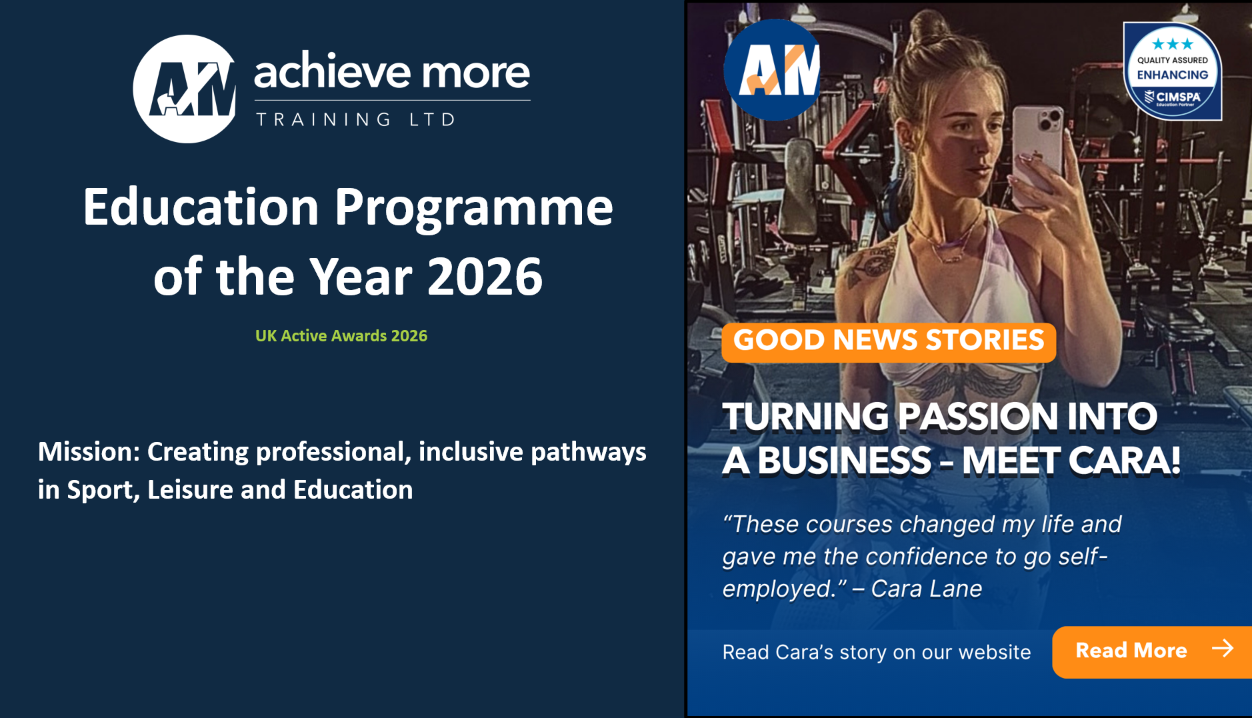
Achieve More Training (AMT) is a specialist Welsh training provider committed to developing professional, inclusive and accessible work-based learning pathways across Sport, Leisure and Education.
Our mission is simple:
“Providing professional and inclusive work-based learning pathways for roles in Sport, Leisure and Education.”
AMT works collaboratively with employers, awarding organisations, sector bodies, further education partners and government stakeholders to address workforce shortages, improve accessibility into employment and create sustainable progression routes within the physical activity sector in Wales.
During the eligibility period, AMT has focused on transforming access to leisure and fitness qualifications across Wales by developing fully fundable, industry-relevant and employment-focused pathways for learners aged 16+.
Our work has centred around two key priorities:
- Expanding accessible part-time Further Education (FE) fitness qualification pathways.
- Embedding Exercise Referral into apprenticeship progression routes to better meet employer and community health needs.
These initiatives have directly supported learners, employers and local communities while strengthening the future workforce of the Welsh physical activity sector.
The Programme
Creating Accessible and Employment-Focused Pathways in Leisure and Fitness
AMT identified several major barriers impacting the development of the leisure and fitness workforce in Wales:
- Limited access to funded fitness qualifications.
- Qualifications that were not fully aligned to employer needs.
- Inconsistent progression routes between FE learning and apprenticeships.
- Workforce shortages within the leisure and fitness sector.
- Limited pathways into employment for learners who were unemployed, underemployed or changing careers.
- Growing employer demand for staff qualified in both Personal Training and Exercise Referral.
To address these challenges, AMT developed an integrated education and workforce development model that connected:
- Part-time FE provision.
- Industry-recognised qualifications.
- Employer partnerships.
- Apprenticeship progression.
- Self-employment support.
- Community health priorities.
This programme was designed to ensure learners could access meaningful qualifications regardless of their background, employment status or previous experience.
Part-Time FE Pathways
Expanding Access to Industry-Recognised Qualifications
AMT worked collaboratively with awarding bodies, colleges and Qualifications Wales (QiW) to ensure qualifications were:
- Fit for purpose.
- Accessible.
- Fundable.
- Employer relevant.
- Aligned to workforce demand.
This work helped create sustainable part-time FE pathways for learners aged 16+ across Wales.
The core qualifications delivered included:
- Level 2 Fitness Instructor.
- Level 3 Personal Trainer.
- Level 3 Exercise Referral.
The programme was intentionally designed to support:
- School leavers.
- Career changers.
- Existing leisure staff.
- Unemployed learners.
- Individuals returning to work.
- Learners seeking self-employment opportunities.
AMT recognised that accessibility was critical. Many learners could not commit to full-time education due to employment, caring responsibilities or financial barriers. By offering flexible part-time routes, AMT widened participation and opened the sector to a broader and more diverse learner base.
Employer Partnerships and Industry Collaboration
Building Direct Routes Into Employment
A key strength of the programme was the close collaboration between AMT and employers across the leisure and fitness sector.
AMT partnered with:
- National operators such as PureGym.
- Regional leisure providers including Gwella (Flintshire).
- Conwy Ffit.
- Local authority leisure services.
- Independent fitness employers.
These partnerships ensured the curriculum reflected real employer needs and current workforce demands.
Employers actively supported:
- Learner progression.
- Industry placements.
- Recruitment opportunities.
- Apprenticeship progression.
- Skills feedback.
- Employability development.
This created a clear and purposeful pathway from education into employment.
The programme also recognised that modern fitness careers increasingly include freelance and self-employed opportunities. As a result, learners were supported with:
- Business development guidance.
- Self-employment preparation.
- Professional standards.
- Client management skills.
- Industry expectations.
This ensured learners were equipped not only to gain qualifications, but to build sustainable careers.
Apprenticeship Innovation
Embedding Exercise Referral Into Apprenticeship Pathways
Alongside the FE pathway work, AMT collaborated with SkillsActive, CIMSPA, Qualifications Wales (QiW), Medr and awarding organisations to strengthen apprenticeship progression opportunities within the sector.
Through this collaboration, AMT helped integrate the Level 3 Exercise Referral qualification into the Level 3 Personal Trainer apprenticeship framework.
This was a significant development for the Welsh leisure and fitness workforce.
The addition of Exercise Referral created:
- A more purposeful apprenticeship pathway.
- Improved progression opportunities.
- Better alignment with employer needs.
- Greater workforce capability.
- Enhanced health and wellbeing outcomes for communities.
This was particularly important for local authority leisure services and operators delivering the National Exercise Referral Scheme (NERS).
Employers increasingly require staff who can:
- Deliver fitness services.
- Support health referrals.
- Work with inactive populations.
- Contribute to preventative health agendas.
- Deliver safe and inclusive exercise interventions.
By embedding Exercise Referral into apprenticeship provision, AMT helped create a workforce that was better prepared to support public health priorities while improving employability for learners.
This initiative also strengthened progression opportunities for learners moving from:
- Part-time FE provision.
- Existing leisure employment.
- Fitness instruction roles.
- Community sport pathways.
into advanced professional roles within the sector.
Employer and Sector Impact
Supporting the Welsh Leisure Workforce
The programme has had a significant impact on employers across Wales.
By aligning education provision with workforce demand, AMT helped employers:
- Address recruitment shortages.
- Improve workforce capability.
- Access industry-ready staff.
- Develop internal progression opportunities.
- Improve delivery of exercise referral programmes.
- Strengthen public health support services.
The integration of Exercise Referral into apprenticeship pathways was particularly valuable for local authority leisure services delivering health-related programmes.
This created a workforce capable of supporting:
- Inactive populations.
- Individuals with health conditions.
- Community wellbeing initiatives.
- Preventative health interventions.
The programme therefore contributed not only to workforce development, but to wider health and wellbeing priorities within Welsh communities.
Inclusion and Accessibility
Widening Participation Across Wales
Inclusion and accessibility were central to the programme design.
AMT intentionally developed pathways that were:
- Flexible.
- Affordable.
- Fundable.
- Employer relevant.
- Accessible to learners aged 16+.
This removed significant barriers to participation for many learners.
The programme supported:
- Learners returning to education.
- Career changers.
- Individuals seeking flexible employment.
- Existing leisure staff seeking progression.
- Learners from diverse backgrounds.
- Learners requiring part-time study options.
By working closely with colleges, awarding organisations and sector stakeholders, AMT helped ensure qualifications remained accessible and aligned to Welsh workforce priorities.
This collaborative approach strengthened opportunities for learners across Wales while improving long-term workforce sustainability within the sector.
A Joined-Up Workforce Development Model
What makes this programme innovative is the way it connects education, industry and workforce development into one integrated learner journey.
Rather than delivering isolated qualifications, AMT created a connected progression pathway that includes:
- FE learning.
- Industry qualifications.
- Employer engagement.
- Apprenticeship progression.
- Exercise Referral specialism.
- Self-employment support.
- Workforce readiness.
The programme also demonstrated innovation through:
- Cross-sector collaboration.
- Qualification reform support.
- Alignment with workforce demand.
- Integration of health and fitness pathways.
- Strong employer involvement.
- Progression-focused curriculum design.
The addition of Exercise Referral into the apprenticeship pathway is a particularly strong example of sector innovation.
This addressed a genuine workforce need while improving learner progression and strengthening community health delivery.
Sustainability and Future Development
Building the Future Workforce
AMT is committed to continuing the development of inclusive and professional learning pathways across Wales.
The long-term sustainability of the programme is supported by:
- Strong employer partnerships.
- Sector body collaboration.
- Qualification alignment.
- Apprenticeship progression routes.
- Ongoing workforce demand.
- Alignment with public health priorities.
AMT will continue working with employers, stakeholders and sector partners to:
- Expand access to qualifications.
- Improve progression opportunities.
- Address workforce shortages.
- Strengthen exercise referral delivery.
- Support economic and community wellbeing.
The programme demonstrates how education providers can work collaboratively with industry to create meaningful, inclusive and sustainable workforce pathways.